
Police stepped up surveillance of festivities by young people and children during the end-of-school week
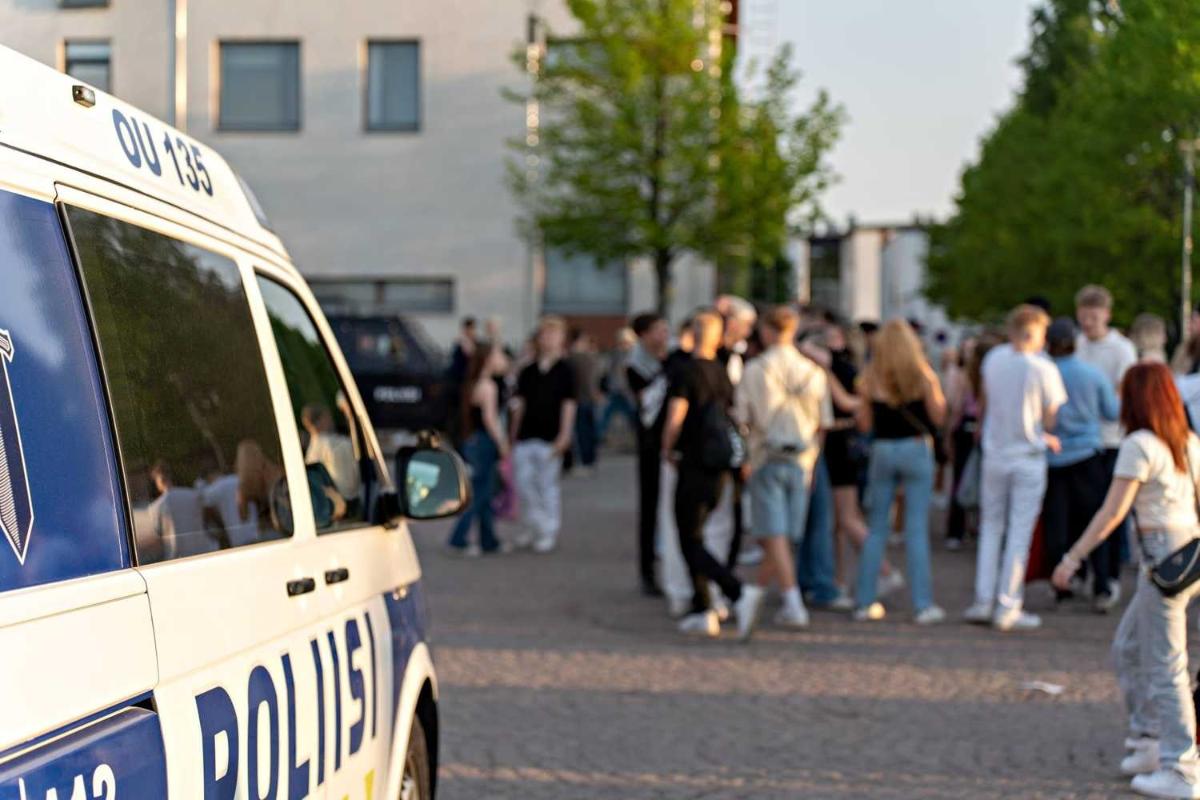
Intensified police surveillance during the final week of the school year has already become a tradition and the focus also this year was on proactive surveillance during school hours ahead of the end-of-school weekend. In addition to increased surveillance over the weekend, police officers were actively present in schoolyards, including during breaktimes.
Importance of cooperation with schools has become increasingly evident
The active presence of the police in schoolyards is part of a nationwide school cooperation model that the police launched last year. The purpose of the model has been to increase police interaction with children and young people.
The same school cooperation model also includes virtual lessons led by the KOULU25 team. In the last week of May, traffic-themed lessons by the police attracted more than 81,000 children and young people to their screens. In total, all national online lessons have had well over half a million viewers live over the past year.
The police have also distributed the contact information of the local police to all schools in the event of problems. The police have received thousands of contacts from teachers and principals through phone calls. Cooperation has been extensive.
End-of-school week celebrations of young people have changed over the years
Police departments have already reported on the results from their respective areas regarding the end-of-school-year weekend. When compiling national statistics and comparing them to previous years, the end-of-school-year weekend this year saw relatively peaceful celebrations among young people, with the exception of a few isolated incidents. Excessive alcohol consumption, which was common in previous years, is now significantly less prevalent than earlier.
Surveillance during the end-of-school weekend is always mostly carried out through visible policing by intervening in the use and possession of all intoxicants. This year, the police devoted approximately 10% more working hours to surveillance than last year. Surveillance was carried out in several areas working together with youth and social services as well as other police stakeholders.
The last day of most schools was on Saturday, which is when most of the surveillance took place. During the surveillance operation, 1,136 litres of alcohol were disposed of nationwide. This is about 400 litres more than in 2025 but remains at roughly the same level as in 2024 (1,168 litres). In previous years, the amount of alcohol disposed of has often been significantly higher, although no two years are comparable in this respect either. This is partly due to the amount of working time allocated to surveillance by the police, which varies annually based on the number of other emergency tasks. Another significant factor is the weather, which affects young people's enjoyment of being out and about on the evening of the last day of the school year.
Of the drinks disposed of, 347 litres contained more than 4.7% alcohol, which means most of the drinks disposed of were of light alcoholic content. During the weekend, a total of 394 persons under the age of 18 were found guilty of offences, 99 of these persons were under the age of 15. Last year, the number of persons under the age of 15 was only 21. However, no major conclusions can be drawn from this, as in the light of statistics there seems to be large regional differences. The police will analyse these figures in greater detail as part of their data-driven approach. If the analysis reveals any particular background factor, measures will be directed in the form of proactive measures where they will be most effective —for example, through cooperation with schools.
Fortunately, only a few knives or objects capable of causing serious injury were found. A total of 410 child welfare reports were filed during the week-long operation. Although the number of child welfare reports is slightly higher than last year, it cannot be considered significantly high. A few years ago, during a similar surveillance period, over 1,000 child welfare reports were filed over the same weekend.
“The responsibility for children and young people and what they do always lies with their parents. This cannot be overemphasised. The police do their part, for example, through cooperation with schools, but the real supervision and guidance of children’s and young people’s behaviour take place at home,” says Chief Superintendent Tuomo Korhonen at the National Police Board.