
Flares do not belong in the stands – a safe event is the goal for everyone
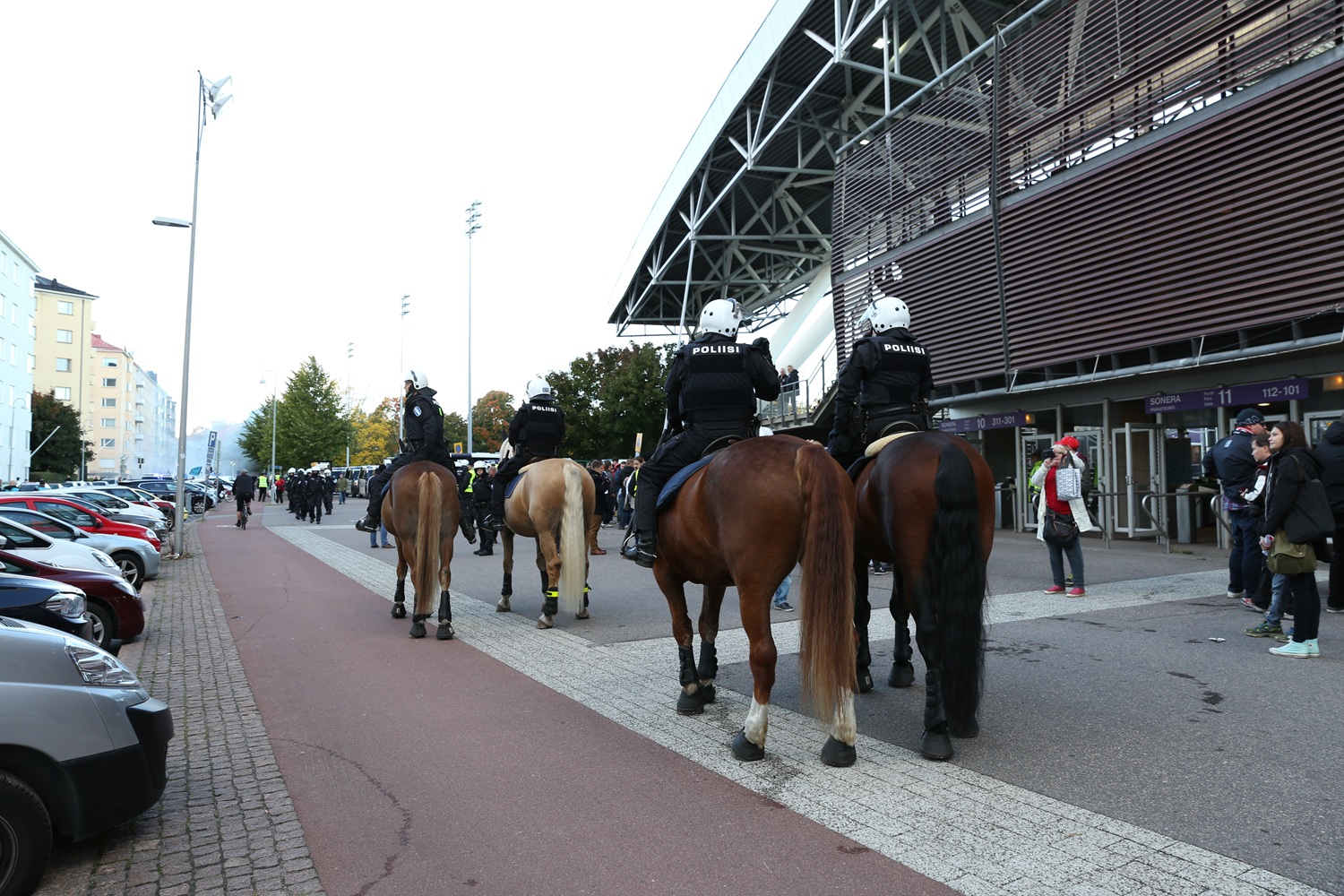
Sports fan culture is rooted in traditions that go back decades. Fans proudly wear the colors of their own club or favorite team. Through colors and attire, they express their history as well as their connection to their hometown or sports clubs. Colors and logos are part of all sports, regardless of the discipline, location or country. Sport has always evoked strong emotions – and will continue to do so.
A shared risk across all sports
Recently, various negative phenomena linked particularly to football supporter groups have been discussed in Finland as well. However, supporter communities in Finland are relatively small, and the same fans often support their club across different sports. These phenomena therefore spread to other sports too, as has been seen, for example, in ice hockey.
The greatest attention has been drawn to various smoke effects and pyrotechnic devices (“pyros”), which create striking visual effects during matches. These have already been seen indoors at ice hockey games as well. Everyone can understand that the use of fireworks, especially indoors, inevitably causes problems.
The Finnish Safety and Chemicals Agency (Tukes) has issued guidelines for situations where pyrotechnics are used at public events. Tukes has stated that the use of smoke devices and pyrotechnic products among crowds poses a serious and immediate danger. Inhaling smoke gases, high temperatures and explosive properties can cause health issues and injuries.
From a legal perspective, the police consider pyrotechnics and their use at public events to be prohibited. In principle, such cases are treated as violations of explosives regulations. The only exception is professional displays, which require a separate permit.
Traditions of fan culture – or illegal acts?
Supporters, especially in football, feel that pyrotechnics are now part of fan culture. However, this has not always been the case. Having attended football matches in different countries, I have seen how much better the atmosphere is in stadiums where supporters follow the culture without pyros.
Smoke and pyrotechnics can easily create an aggressive atmosphere in a stadium, even when there is no actual intent of aggression. Chanting, large tifos (fan banners), flags and other visual elements create a special atmosphere in these stadiums without the use of pyrotechnics. However, creating such an atmosphere requires significantly more effort from supporters than using smoke and pyros – perhaps this is one reason why they are defended.
The use of pyrotechnics has increased in recent times both in Finland and internationally. One contributing factor is their easy availability online. Simply knowing that their use is illegal has not been enough to prevent it. Nor has the fact that no one can reliably say what substances these pyrotechnics and smoke devices contain or how they will ultimately behave.
The organiser is responsible for event safety
The event organiser is responsible for the safety of the event. This principle, based on law, has even become something of a cliché in some circles. Nevertheless, the organiser must comply with laws and regulations.
A decision on a public event is made by the local police department, which discusses the arrangements with the organiser beforehand. In its decision, the police can impose binding requirements on how event safety must be ensured. These matters are reviewed together with the organiser before the final decision – it is a matter of cooperation.
In the context of sports events, the police have cooperated with various stakeholders for decades, both nationally and internationally. The police do not, under any circumstances, want football matches to be interrupted or the course of events restricted by police orders. The goal is that the organiser takes responsibility for their own event. That is not the role of the police.
From this perspective, the matter has also been discussed between the Football Association of Finland, the Veikkausliiga and the police, and event-related guidelines have been specified and communicated. None of the parties wishes to act in violation of the law.
An international problem
We are not alone in facing this issue. The same phenomena, on a much larger scale, are present in many European countries.
To prevent the situation in Finland from escalating to the level seen in, for example, Sweden, it is important to act proactively and in a preventative manner. In several European countries, the situation has had to be addressed through strict legislation – often only after problems have grown significantly. Fatal incidents have also occurred.
Hopefully, Finland can take a wiser approach. Let us demonstrate that the use of pyrotechnics at public events without professional and authorized implementation is not acceptable. This is the goal of all authorities, especially the police. It is also clear that the majority of sports clubs and organisations share this objective. No one wants to bear responsibility for serious accidents.
Let us address the issue through good cooperation, as has been done for decades in the context of sports events. The police hope that the matter will be discussed openly and honestly with all parties involved. This includes sports federations and clubs, as well as fan groups and football professionals such as players and referees. The responsibility lies with all of us.