
Helsinki Police Department has significantly increased surveillance, emergency response, criminal investigations and deportations due to drug-related disturbances
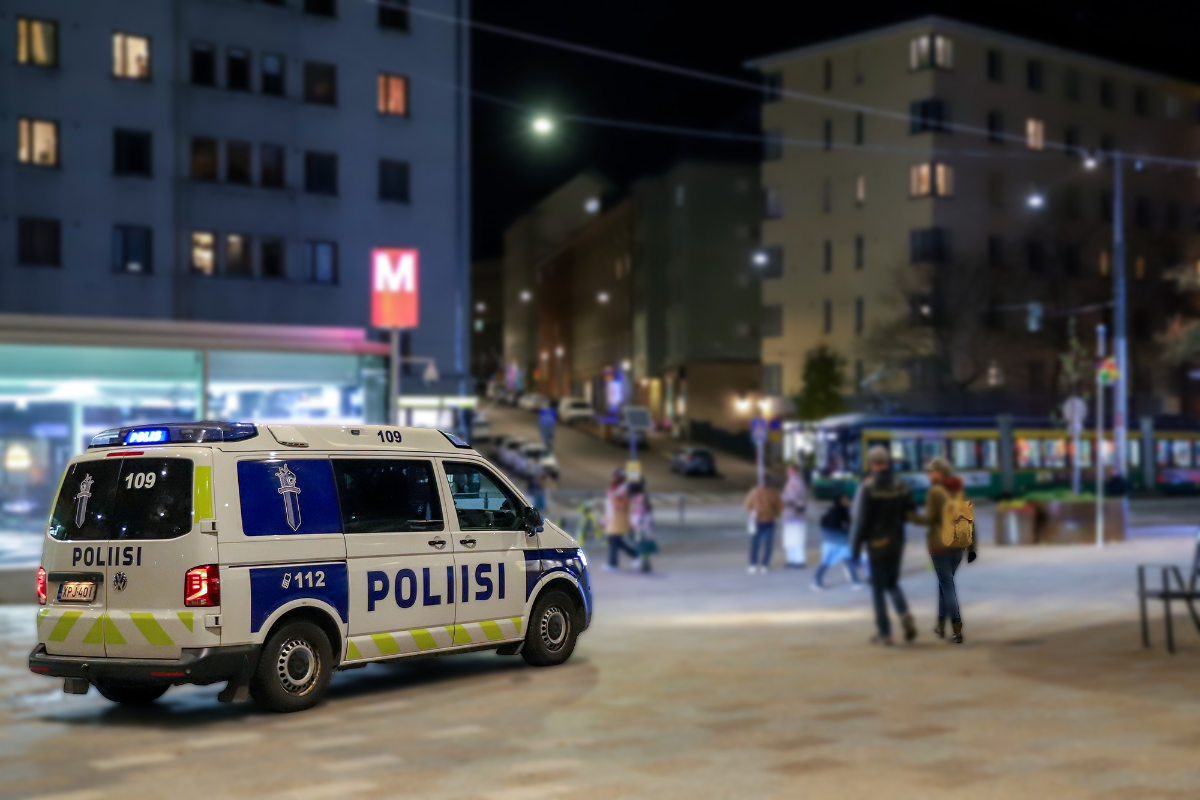
Call the emergency number 112 to report acute disturbances caused by drugs and submit tips to the police about other security concerns.
The Helsinki Police Department receives numerous reports about disturbances caused by substance abuse and feelings of insecurity. The disturbances are mainly related to drug use and related crime.
The Helsinki Police Department considers residents' feedback when planning its activities. The police are constantly present in the city and ready to act around the clock, every day of the year.
The police encourage people to call the emergency number 112 in urgent situations where immediate assistance from the police, first aid or rescue services is required. Emergencies include assaults, drug dealing and dangerous or disruptive behaviour.
"The Helsinki Police Department is responding to emergencies faster than ever before. The improved response time is a result of increased visible surveillance in areas prone to disturbances. The number of surveillance tasks has increased significantly in the early part of the year," says Superintendent Jere Roimu.
The average response time for the most urgent emergency calls was 4.8 minutes from the beginning of January to the end of August in 2025, even though the number of emergency calls increased by 13 percent during the same period. For the whole of 2025, the total number of emergency calls is expected to be 161,380.
Excellent emergency response readiness and increased surveillance reduce disruptive behavior, prevent crimes in advance, and speed up the investigation of crimes that have already occurred.
Residents are asked to assist the police in targeting their surveillance efforts, as drug-related security risks and the number of tasks are skyrocketing
The Helsinki Police Department monitors and anticipates the security situation in real-time, based on which the police target surveillance, emergency services, criminal investigations, and other measures. Surveillance is targeted in an information-driven manner based on the police's own situation awareness and feedback from stakeholders and citizens.
The amount of surveillance carried out at locations causing disturbances has increased by 121 percent compared to 2024. During the current year, the police have removed 31,452 individuals causing disturbances from trouble spots. This is 68 per cent more than in 2024. By the end of August 2025, 11,367 individuals had been apprehended. This represents a 20 per cent increase over the corresponding period in 2024.
Residents can assist the police by sending non-urgent tips to vihjeet.helsinki@poliisi.fi about possible drug dealing or other criminal activity, or activity that jeopardises street safety.
Drug seizures by the Helsinki Police Department have increased
Criminal investigations into drug dealers are conducted on the streets and online. As a rule, methods that are not visible on the streets are used for this activity.
In 2025, the Helsinki Police Department has uncovered 3,469 drug offences, which is 14 percent more than at the same time last year. A total of 3,368 suspects have been identified in connection with drug offences, which is 15 percent more than in 2024.
The Helsinki Police Department has already sent 475 kilograms of seized narcotics to the National Bureau of Investigation's forensic laboratory this year, compared to a total of 448 kilograms seized in 2024.
‘The number of drug seizures and the quantities seized by the Helsinki Police Department have risen for cannabis, amphetamine, Alpha-PVP, and cocaine,’ says Senior Detective Superintendent Jari Illukka.
The proportion of foreigners involved in street and online drug sales has increased. As a result, the Helsinki Police Department has enhanced its criminal deportations.
The Helsinki Police Department has deported 598 individuals from the country so far this year. This is 201 more than last year, representing a 50 percent increase.
"The increase is largely due to more effective monitoring and the fact that deportations have become an integral part of maintaining public order and safety. Amendments to the Aliens Act have also given the police more powers in this regard. Deportations related to the prevention of immediate threats to public order and safety have increased," says Superintendent Simo Kauppinen.
The harmful effects of drugs are escalating, and combating this issue requires clearly defined roles for public sector actors and aligned objectives
The number of drug users and the amount of drugs used in Finland are skyrocketing. This causes multidisciplinary security, health, and social problems.
The growing demand for drugs increases international organised crime related to their manufacture, import, and distribution. Drug dealing on the streets and online, as well as drug use, causes public disorder. These often take the form of various types of violence, property crime, and other crimes. These types of crimes target users and their immediate circle, and to an increasing extent also bystanders and specific professional groups.
The adverse effects of drugs affect an increasingly wide range of people, and combating the resulting security, health, and social problems requires an increasing amount of resources from society. From the point of view of overall security, it is therefore essential to halt the steady increase in the number of drug users, especially young people.
"The Helsinki Police Department has its own role and core mission. The efficiency of operational activities has been significantly improved during the current year, and police services are being continuously developed in line with changes in the operating environment and feedback received," says Police Chief Jari Liukku.
The primary goal of the Helsinki Police Department is to meet residents' expectations when it comes to essential police services.
"However, stopping the growth of the drug problem requires a real-time picture of the situation, more effective preventive communication based on facts, a more focused attitude, and a shared view within the public sector on the underlying causes of the drug problem, how best to combat them, and the role of each actor," says Liukku.