
The use of alpha-PVP can also be seen in road traffic
Abstract
|
Nearly 60 per cent of those suspected of driving while under the influence of narcotics were caught through the active, spontaneous enforcement efforts of the police. The increasing use of narcotics in society can also be seen in road traffic. The profile of drug use in cases of driving while under the influence of narcotics is not exactly the same as that shown by wastewater studies by the Finnish Institute for Health and Welfare. The implementation of enforcement by the police takes into account changes in society in terms of drug use. As an example, the use of alpha-PVP is also visible to an increasing degree in the everyday work of the traffic police. In most cases, however, alpha-PVP is not the only narcotic used by the driver of a vehicle.
The use of alpha-PVP has increased rapidly
The synthetic narcotic alpha-PVP (alpha-pyrrolidine valerophenone, known in public discussion in Finland with the Finnish name “peukku”) is found in all EU member states. The use of this drug has increased rapidly in Finland in recent years. However, alpha-PVP is not a new substance. It entered the market originally just over ten years ago as a so-called designer drug. In Europe, alpha-PVP was seized for the first time in France in the spring of 2011. It was classified as a narcotic in Finland less than three years later at the end of 2013 by a Government Decree (1098/2013), and in the EU as late as in the summer of 2016.
The wastewater studies by the Finnish Institute for Health and Welfare (THL) can be used to assess the total consumption of narcotics at the population level, as well as trends in use and regional differences. According to the wastewater studies, the total consumption of narcotics in general has increased over the past two years throughout Finland. Amphetamine is still the most common narcotic in Finland, with the exception of the Helsinki metropolitan area, where cocaine is used more than amphetamine. Based on statistical data by Finnish Customs, the nation-wide drug situation has deteriorated greatly and rapidly. Finnish Customs have seized a record amount of narcotics this year. The amount of drugs seized by the end of September was more than five times as high as four years ago. The amounts of seizures of conventional narcotics are high, and in addition to them, narcotic medicines and new designer drugs previously unknown in Finland are imported into the country. According to Hannu Sinkkonen, Enforcement Director at Finnish Customs, many substances that are at least as dangerous or more dangerous than alpha-PVP have already been found in Finland. New drugs, which have not even been classified as narcotics in Finland yet, are constantly flowing into Finland. Alpha-PVP also came to Finland when its use was not prohibited.
According to Annuska Dal Maso of the Finnish Association for Substance Abuse Prevention EHYT, Finland is an amphetamine country. She says that the Greenlight operation may have contributed to the arrival of alpha-PVP in Finland when the supply of amphetamine decreased rapidly. One of the most significant reasons for the rapid increase in the use of alpha-PVP is related to its suitability for substitution use specifically with amphetamine. Alpha-PVP has replaced the use of other, more conventional drugs, and it is very likely that many abusers of amphetamine have switched to using alpha-PVP alone. The role of alpha-PVP in drug trafficking is relatively small on an international scale, but the demand for the substance in Finland is disproportionately great.
Another important reason for the exceptionally rapid growth in the use of alpha-PVP is related to the diversity of its use. Unlike many other drugs, alpha-PVP can be used in virtually any way: by smoking, vaporising, inhaling, injecting intravenously, sniffing, ingesting as well as absorbing through the mucous membranes in the mouth. Alpha-PVP is also used by “vaping”, in other words with e-cigarettes, which has contributed to the popularity of the substance, especially among young people. Smoking alpha-PVP may be considered a bit like smoking a cigarette, and it has been said to be trendy. The feeling may also be “softened” in the end with alcohol, among other things.
The abuse of alpha-PVP is continuous, which is reflected in wastewater studies as uniform residue amounts on different days of the week. However, regional differences with drugs are great, and this is also the case with alpha-PVP. Both the amounts of drugs and the substances used vary between different parts of Finland. According to Teemu Gunnar, Chief Specialist and Head of Forensic Toxicology at the Finnish Institute for Health and Welfare, the amounts of drugs used in big cities in Southern Finland are much greater than in many smaller towns. The wastewater study reveals that the use of alpha-PVP has increased clearly in the Helsinki metropolitan area as well as in Southern and Southwestern Finland. In the Helsinki metropolitan area, the amounts have increased as much as fivefold since 2022. Alpha-PVP has hardly been detected in Northern and Eastern Finland.
According to Catherine De Bolle, Executive Director of Europol, Europe “is drowning in drugs”. Alpha-PVP is imported into Finland from abroad, especially from China, but it is also manufactured in Europe and even in different parts of Finland. Typically, however, the substance comes to Finland from outside the borders of Finland. Partly due to domestic production, there is a lot of the substance on the market and readily available. Alpha-PVP has been manufactured in ordinary apartment buildings. These kinds of “laboratories” pose a serious danger to their neighbourhood.
Agitation, aggressiveness and unpredictable behaviour
In its precedent KKO 2018:76, the Supreme Court of Finland has defined alpha-PVP as a very dangerous narcotic. In its decision, the Supreme Court has assessed alpha-PVP to be as dangerous a narcotic as amphetamine, methamphetamine and MDPV (methylenedioxypyrovalerone). The substance resembles amphetamine, among other things, but is much more potent than it.
Alpha-PVP is pharmacologically in the group of stimulants. Its effects are similar to those of cocaine and amphetamines. All of these are grossly agitating drugs. Alpha-PVP is an extremely powerful stimulant. It stimulates the central nervous system intensely, possibly causing a euphoric state in the user. It can sharpen the senses, boost self-esteem and refresh momentarily. In the case of alpha-PVP, the pleasure spike only lasts a for a short period of time, but it is extremely high, and it causes hallucinations. According to Ulriika Sundell, Medical Director of the A-Clinic Foundation, alpha-PVP also increases physical activity: it is difficult to stay still, and users become hyperactive and restless in their movements. The drug works in the body for several hours, but the effects are of short duration, which is why the user will very soon need a new dose. A short duration of effect increases the amount of use of the substance rapidly. The dose depends on the method of use, but even a small amount of the drug causes strong effects. Even though a dose of alpha-PVP has a short duration of effect, the substance is particularly dangerous due to its long-term effects. The use of alpha-PVP increases blood pressure and heart rate and causes agitation, anxiety, sleeplessness, delusions, psychosis, violent behaviour and cognitive problems. Possible consequences of an overdose of Alpha-PVP include convulsions, unconsciousness, aggressive raging, hyperthermia and cardiac arrest. The substance has a very individual effect on different persons, but on the whole it makes its users unfit quite quickly. According to Margareeta Häkkinen, Chief Clinician at the Finnish Institute for Health and Welfare, the adverse effects are affected more by how much substance the user has in their body rather than the way in which the substance has been used.
Finnish drug education has long emphasised that drug users do not usually pose a danger to anyone other than themselves. However, alpha-PVP makes people behave differently than many other intoxicants. Authorities have started to warn the public about the dangers of alpha-PVP as it makes its user aggressive and unpredictable. The psychotic behaviour caused by the substance is strongly extroverted, and the person is often very agitated. The delusions can also be so intense that it can be difficult to get the user to calm down. Those who have used alpha-PVP, when they are in a confused state, do not necessarily understand what they are doing. Compared to other drugs, the adverse effects of alpha-PVP are very challenging not only for the police but also for anyone else who has to deal with a person under the influence of the substance. Unpredictable adverse effects create a particular occupational safety risk for the police, emergency medical services and other operators, among others.
The use of alpha-PVP can also be seen in the work of the traffic police
The rise in the use of alpha-PVP has also affected police duties. From the point of view of police assignments, the consequences of the rapid increase in the use of alpha-PVP are associated with the very serious adverse effects of the substance and the consequent increase in criminal offences related to its use. In line with the rapidly increasing use of alpha-PVP, the number of calls with the emergency response centres to reach the police, related to the substance in one way or another, has increased dramatically during 2025. The substance has increased property crime and violent crime, as well as the need for the police to make preparations for unpredictable violence. As an example, the Helsinki Police Department has received a lot of feedback on disturbances and feeling of insecurity caused by substance abuse. Most of the disorders are related to drug use and related crime. The increasing use of drugs also increases other crime significantly.
Between January and October this year, the police have uncovered a total of about 12,600 suspected offences of driving a vehicle while intoxicated. Of these, about 4,200, or one third, have been recorded as having occurred in June to August. The share of driving under the influence of narcotics was about 32 per cent during the summer months. In October, narcotics cases accounted for 40 per cent of suspected cases of driving while intoxicated. The differences between different months are not great, but in the summer months, driving while under the influence of alcohol is more commonplace than at other times. During January to October, the police recorded about 4,500 suspected cases of driving under the influence of narcotics in the whole of Finland, and about 1,400 from June to August (excluding Åland).
The use of alpha-PVP can also be seen to an increasing degree in the work of the traffic police. By driving a motorised vehicle under the influence of alpha-PVP, a person is guilty of driving while intoxicated or driving while seriously intoxicated (Chapter 23, Sections 3 to 4 of the Criminal Code, 1998/2002). Based on queries made from the information systems of the police, in June to August last summer the police encountered more than 100 suspected offences of driving while intoxicated, which also included a suspicion of driving a vehicle under the influence of alpha-PVP. This year, roughly 50 to 60 per cent more suspected offences of driving while intoxicated that were more or less related to the use of alpha-PVP have been recorded in the police systems than in 2024. The number of suspected cases has been at a record high level since June. The number of cases has increased year by year, which means that alpha-PVP is increasingly associated with offences of driving while intoxicated. Indications of the use of the substance come to light at least through the enforcement efforts of the police, and other narcotics crimes may also be uncovered this way.
In general, stimulants may even improve the driver’s ability to concentrate and reduce fatigue by stimulating the central nervous system, but on the other hand, they can increase aggression and risk-taking. The effects on the central nervous system are accentuated when stimulants are used in combination with drugs that suppress the central nervous system (such as cannabis) and sedatives.
A suspected offence of driving while intoxicated is usually also associated with an offence of illegal use of a narcotic drug and unauthorised operating of a vehicle, in other words driving without a driving licence. As early as almost ten years ago, these offences were most often included in criminal reports related to alpha-PVP, when the matter was analysed in a thesis of the Police University College. The frequent occurrence of these three offences in the same criminal report is very likely due to the nature of the offences in question. When the police perform an instant drug test on the driver of a vehicle and the test result is positive, the driver is taken for blood tests. These offences are recorded as driving while intoxicated and as illegal use of a narcotic drug in the criminal report. It is also often the case that the drug user has already lost their right to drive earlier, in which case an offence of unauthorised operating of a vehicle is also recorded in the crime report.
As many as 85 per cent of drivers suspected of driving while intoxicated or seriously intoxicated during the summer, also with verified alpha-PVP in their blood, did not have a valid driving licence. In most cases (in about 75% of the cases), alpha-PVP was not the only narcotic under the influence of which the suspected driver had been driving a vehicle. Mixed use of drugs is common among alpha-PVP users. It is therefore commonplace for the driver to have used also amphetamines or medicines classified as narcotics in addition to alpha-PVP. Clinical data in Finland indicates that alpha-PVP is often used with amphetamines. On the road, amphetamine or cannabis, for example, may have shown up in an instant drug test, and the use of alpha-PVP has been revealed later as a result of a blood test. The suspect may have appeared to be intoxicated and sometimes even told about the use of alpha-PVP. Sometimes alpha-PVP paraphernalia are found in the vehicle or in the suspect’s possession, which gives a strong indication of the use of the drug in question.
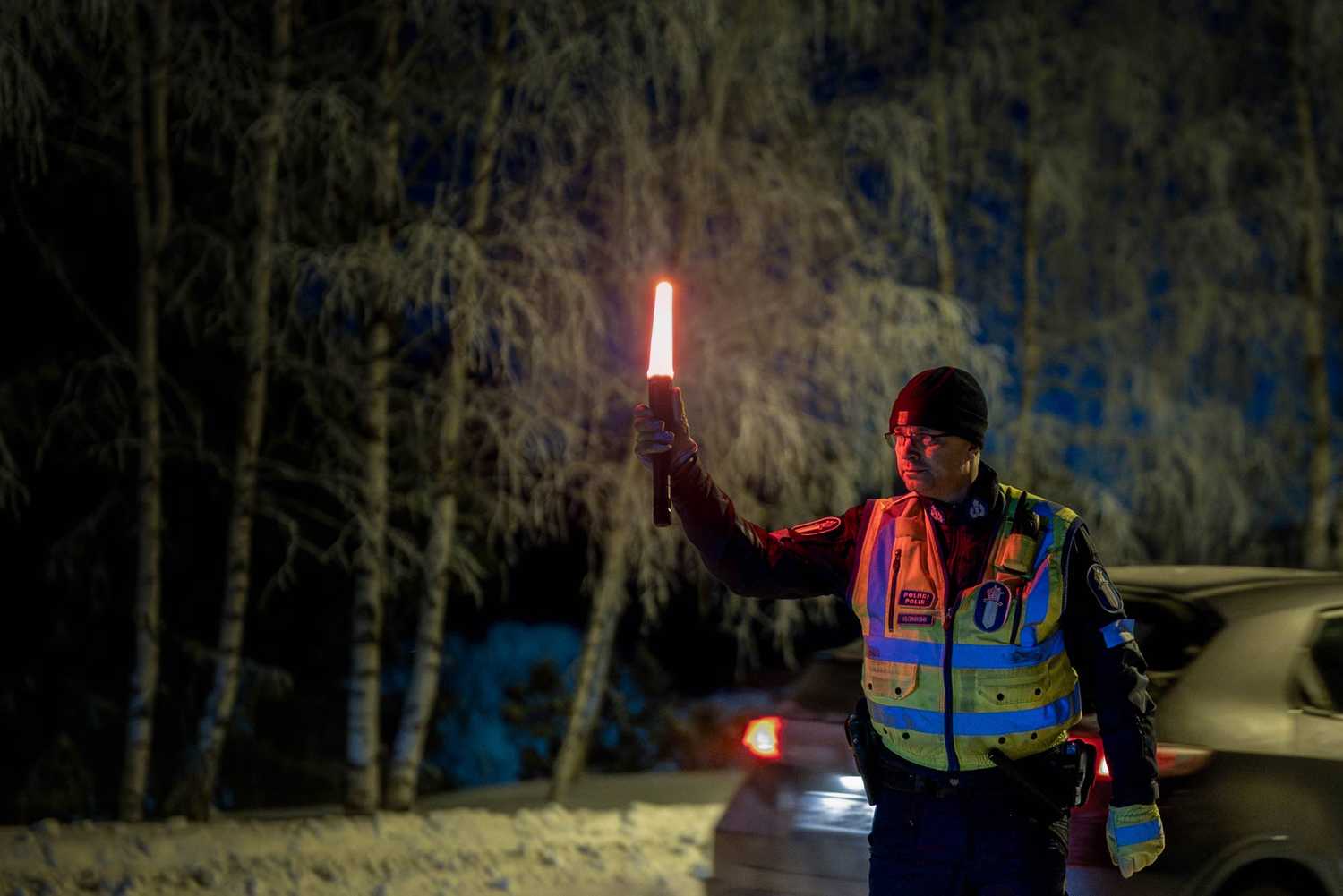
Nearly 60 per cent of the suspects were caught through the active, spontaneous enforcement efforts of the police. The enforcement may have taken place in the form of general traffic surveillance, surveillance by means of unmarked police vehicles, stop checks to reveal driving while intoxicated, or other general supervision of order and security. In the summer, the occurrence of the suspected offences varied greatly depending on the day of the week and the time of day. Those caught driving while intoxicated were encountered equally as often in the middle of the night and at nine in the morning as well as Monday and Saturday.
Alpha-PVP is commonly used mainly by abusers of intoxicants. They have severe addiction problems, the dependence on alpha-PVP is intense, they are marginalised, they do not have a job, and they may not even have a home. The majority, more than 80 per cent, of those who were suspected of driving a vehicle while intoxicated and who had also used alpha-PVP were men. In terms of age, the suspects represented a wide age range, from young people in their twenties to those almost 70 years of age, with the average age being approximately 35 years. The most typical age group (25 per cent of all) was those aged 28 to 30. About 15 per cent of the suspects were unemployed or had no occupation at all. It is true that drug addiction is not associated to issues such as any specific level of education, but a weak social status and a low level of education can be seen among those caught driving a vehicle under the influence of alpha-PVP.
In addition to monitoring drug users occurring in traffic, the police also refer drug users to substance abuse treatment. Getting help for those suffering from drug addiction is in the interest of all of us. According to the view of the police, it is very important and the primary challenge for all that the entire chain of referral to treatment works well.
The whole society to solve the problem
The use of intoxicating substances represents typical behaviour of the human species. In principle, substance use is common, it affects society extensively, and it is not just an issue concerning a marginal group. Many types of people use drugs, although drug addicts, or individuals with a drug problem, are a unique group.
The police endeavour to prevent the disadvantages and insecurity caused by alpha-PVP. In the summer, the police uncovered a major operation to manufacture and distribute alpha-PVP in Finland. The case is being investigated as several aggravated narcotics offences. At the beginning of November, the Eastern Uusimaa Police Department announced that together with Customs and through international co-operation it had uncovered an exceptionally extensive organisation for the import and distribution of narcotics. This international organisation is suspected of having smuggled and distributed hundreds of kilograms of narcotics, including alpha-PVP.
Alpha-PVP has been in the eye of public debate in Finland over the past year. Even though the use and problems of cocaine and alpha-PVP are often covered differently in media, legally they are pretty much the same thing. Sakari Melander, Professor of Criminal Law at the University of Helsinki, has stated that from a legal point of view, social control through criminal law, if it is to be used, should be targeted equally at all drug users, regardless of the substance used. Also from the point of view of the police, alpha-PVP is just one narcotic among many others. There has been a continuous drug problem in Finland for years, and alpha-PVP is just the tip of the iceberg. It just makes the drug problem visible. Solja Niemelä, Professor of Addiction Medicine at the University of Turku, has stated that this is a long-term choice in substance abuse policy. Even if alpha-PVP could be completely eradicated from the streets, the widespread drug problem would not disappear. The amphetamine shortage that prevailed a few years ago no longer exists, and now there are both amphetamine and alpha-PVP on the market. According to Annuska Dal Maso of EHYT, alpha-PVP is so potent that amphetamines no longer have much effect on many users.
Drug abuse is closely linked to many other social and health problems as well as to general disorder and criminal behaviour. Recent public debate has shown that the deterioration of the drug situation is now widely reflected in society as a whole. According to the Police Barometer, Finns are concerned about the use and sale of drugs in public places, even more so than about organised crime, gang crime or driving while intoxicated.
The effects of alpha-PVP can be seen on the streets, in hospitals and in the news headlines. Hannu Sinkkonen of Finnish Customs has stated that society will become much less safe if the situation with alpha-PVP expands further. There is a need for multifaceted solutions, better exchange of information, legislative solutions, better services and changes in attitudes in society to the problems caused by the drug. In other words, there is not just one solution. Drug use and the related increase in other problems is a long-term and deepening social phenomenon. National Police Commissioner Ilkka Koskimäki has stated that the operating environment of the police has changed, and drugs are everywhere. He has proposed that an overall survey be conducted to study the drug situation in Finland and to assess the measures. Minister of the Interior Mari Rantanen has stated that the police are doing everything in their power to combat the phenomenon, which is evidenced by the fact that the amounts of seizures of alpha-PVP have been increasing. The police have intervened in the increased sale of drugs in public places and forwarded users to have proper treatment. However, the police alone cannot solve the problem, but the support of the whole society is needed for this. The situation cannot be solved by a single authority or party. Annuska Dal Maso is now building a system where the police, Customs, Finnish Institute for Health and Welfare and professionals working with drug users could exchange information quickly. In this way, information about new dangers in the drug market could be obtained quickly and it would be possible to react to them immediately by providing help and allocating resources. It should be possible to intervene in substances such as alpha-PVP at the right time before the situations escalate and the use of substances increases. According to Hannu Sinkkonen, the solution would be to amend the legislation so that it would identify generally hazardous products that are known to be dangerous but have not yet been classified as narcotics or medicines. In this case, an administrative decision could be used to dispose of also new drugs before they end up on the streets and for consumption.
It is also a question of attitudes; we need more understanding of the dangers of drugs. This should be emphasised especially in education directed at children and young people. There is a great need for preventive work aimed at young people in particular, in an era when attitudes towards drugs have become more positive in Finland and internationally.