
Concealing your face at a protest is incompatible with the values of an open and safe society
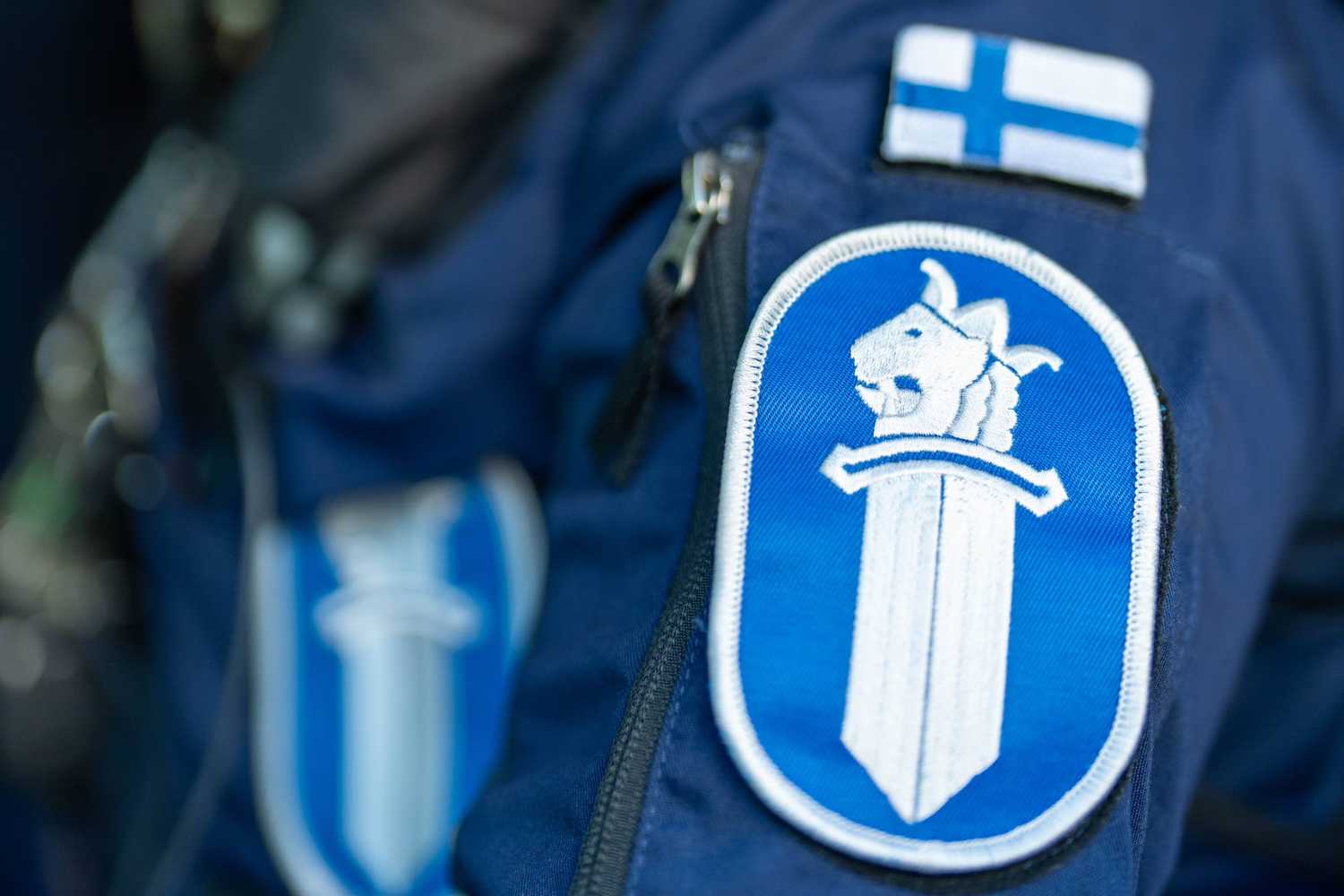
The events on May Day (1 May) continue to reverberate, both in the media and more broadly. The police have launched a pre-trial investigation into events that occurred at a demonstration in Tampere, where demonstrators, who participated to the demonstration arranged by the Blue-Black Movement (sinimusta liike in Finnish) and wore masks to conceal their identities, are suspected of assault. The incidents at the focus of the pre-trial investigation have sparked a debate over whether it is acceptable for people to mask their faces during public gatherings or protests in public places. The matter concerns whether the current definition of the “illegal wearing of a disguise” should be revised, or whether concealing one’s identity should be prohibited entirely.
A general ban on face coverings was proposed at the turn of the millennium in a proposal by the government at the time to amend the Criminal Code and the Assembly Act. Under the original proposal, it would have been prohibited to appear at a public meeting, public event, or other public gathering in a public place with one’s face fully or partially concealed by a hood, mask, paint, or similar covering that makes it difficult to identify the person. In addition, a ban on the possession of face-covering items was proposed for inclusion in the Assembly Act.
The Parliament formed the proposal into legislation that is better known as the criminalisation of wearing a disguise. Under chapter 17, section 13a of the Criminal Code, a person who, in connection with a public meeting or a public event arranged in a public place, or in another public assembly arranged in a public place, wears a disguise so that he or she cannot be recognised and clearly intends to use violence against a person or cause damage to property shall be sentenced for illegal wearing of a disguise to a fine or imprisonment for at most three months. The law is not a blanket ban on concealing one’s identity; rather, it is prohibited for a person to disguise their identity at a gathering in a public place for a specific purpose—namely, to commit offences while remaining unrecognisable.
It has been challenging for the police to prove a person’s “clear intent”. The current legislation does not properly account for the challenge of proving clear intent with evidence, nor does it consider the rapid developments that can occur during protests: the police are expected to have foresight while being limited to interpreting intentions that often only become clear when the first blow lands or an egg is thrown—if at all. Under the law as it stands, committing a crime while wearing a disguise does not fulfil the essential elements of the illegal wearing of a disguise: there must be evidence that the disguise was used with the specific intent of committing an offence, and that it was not merely an act committed on a whim when the perpetrator happened to be disguised for some other reason.
The right to cover one's face does not take precedence over the safety of others
Concealing one’s identity is linked to several fundamental rights. On the one hand, it is seen as an aspect of the freedom of speech and a means of self-expression. On the other hand, it is a way for a person to protect their identity and privacy, so they are not subjected to discrimination on the basis of their beliefs or opinions. Thirdly, it is part of everyone’s right to self-determination, which is their personal freedom. Fourthly, it is an aspect of the freedom of assembly and, in the case of religious dress, also a part of the freedom of religion.
Despite these worthy and noble goals, face coverings can also be exploited to promote illegal activity and commit crimes. Criminal suspects who mask their faces are difficult to identify. It could be argued that this falls under the privilege against self-incrimination and, by extension, the guarantee of a fair trial, which is also a fundamental right. However, the protection of fundamental rights is not intended to cover unlawful activities or criminal offences, and one person’s right to cover their face can never take precedence over the fundamental rights of other citizens—such as their personal safety and integrity.
The police propose updating the legislation
The police have the authority to intervene in a person’s actions if there are reasonable grounds to believe that the person intends to commit an offence, such as assault, based on the person’s threats or other behaviour, or if an offence is likely based on their prior conduct. Concealing one’s identify to avoid identification may constitute “other behaviour” in the wording of the law, permitting the police to remove a person from the scene or to detain them, if removing them from the scene is an insufficient measure. Action may be taken in advance to prevent people from masking their identities or committing acts while disguised, provided that the criteria provided in the law are met. It is also not out of the question for the police to order the removal of masks as a less intrusive measure to safeguard the freedom of assembly. The police are also authorised to intervene if there are grounds to believe that masked individuals are planning to commit a criminal offence.
However, the issue of wearing face coverings is not really about the extents of police authority. It is fundamentally about how safe people feel in society and how meaningful activities such as protesting are. When people conceal their identities, it creates a threatening and exclusionary atmosphere that tangibly undermines the confidence of peaceful citizens who show their faces to exercise their fundamental rights.
The National Police Board believes that it is time to revise the ban on wearing disguises and the purpose of such a ban: concealing your face at a protest is incompatible with the values of an open and safe society. Openness requires the courage to stand by your words and show your face if necessary. A person who hides their face is not contributing to openness, trust, and safety.